“Liberty and Diversity” by Chandran Kukathas

Philosophy Seminar Series: Tuesday, 17 Apr 2012, 2-4pm, Philosophy Resource Room; Speaker: Chandran Kukathas, Chair in Political Theory, Department of Government, London School of Economics; Moderator: Dr. Ben Blumson

Abstract:

The Mill of On Liberty is convinced that diversity, far from being a threat to liberty, gives liberty its point. What could matter more than human development in its richest diversity; and how better to promote it than by a regime of liberty that leaves people to pursue their own goals as they see fit? But the Mill of the Considerations worries that, left to their own devices and desires, people will not become sufficiently alike to be governed as a single collectivity, or develop sufficient virtue to be governed at all. Libertarian though he is, Mill cannot help think that the government of a free society must take upon itself the task of fostering the qualities necessary for all individuals to possess for the society to prosper.

If freedom matters, and matters above all, should we seek to ensure that a free society is populated by people who appreciate its importance, or at least possess the qualities and attitudes needed to sustain it? Or, if freedom matters, and matters above all, should we let freedom find expression in the great diversity of human attitudes to all things, including freedom? Should people be forced to be free? Or if not forced, at least induced (threatened, tricked, cajoled, bribed, manipulated, or generally educated) into that condition? This paper offers an answer.

About the Speaker: Chandran Kukathas holds the Chair in Political Theory in the Department of Government at the London School of Economics and is Visiting Professor in the Departments of Political Science and of Philosophy at the National University of Singapore. He is the author of The Liberal Archipelago.

More information on the Philosophy Seminar Series can be found here. A list of past talks in the series can be found here.

“The Problem of Choice in the Analects” by So Young Moon

Graduate Seminar Series: 3 Apr 2012, 3-4pm, Philosophy Resource Room; Speaker: So Young Moon, PhD Student

Abstract:

A discourse on the problem of choice in Confucian ethic system has been contentious topic since the last 20th century. In this presentation, I will examine different point of views on the problem of choice in Confucian philosophy by several scholars and present my view on this problem especially in the Analects. The notion of choice in the Analects does not have the same implications of Western notion of choice. What I want to focus on in this presentation is that how the problem of choice can be viewed in the Analects and how this view differs from those of Western traditions.

About the Speaker: So Young holds an MA from Sungkyunkwan University in South Korea. Her study is mainly in early Confucian philosophy, and she wrote her MA thesis on Confucius’ renxue in the Analects. Her current research interests in NUS are early Chinese philosophy, including Confucianism, Daoism, and thoughts of the other schools in the pre-Qin period. Also, she is interested in Comparative Philosophy and Ethics.

“On Using Moral Intuitions in Philosophy” by Sulastri Noordin (GRS Presentation)

Graduate Seminar Series: 3 Apr 2012, 2-3pm, Philosophy Resource Room; Speaker: Sulastri Noordin, MA Student

Abstract:

In this talk, I will present a small part of my dissertation project. It is common philosophical practice to apply moral principles to particular situations, and then to compare the moral judgements generated to people’s intuitive moral judgements about the same situations. I seek to clarify what exactly it is that philosophers are doing with intuitions when they carry out this practice. I claim that they could be doing at least two things: (i) treating moral intuitions as phenomena, which it is the job of moral theories to simply describe/systematise, or (ii) treating moral intuitions as independent evidence in support of or against moral theories. I will attempt to establish what conditions have to hold, in order for moral intuitions to properly serve these uses.

About the Speaker: Sulastri is working towards her Masters degree. She received her BA (Hons) in philosophy from NUS, where she was awarded the Philosophy Book Prize. Sulastri’s particular area of interest is in philosophical methodology. Her dissertation project examines the use of moral intuitions in ethics. To that end, her interests also extend to moral psychology, experimental philosophy, and heuristics and cognitive biases, in hopes of finding interdisciplinary work that sheds light on methodological issues in philosophy. She lives in a quiet neighbourhood with her cat, Immanuel.

“What is an author?” by Paisley Livingston

Philosophy Seminar Series: Thursday, 29 Mar 2012, 2-4pm, Philosophy Resource Room; Speaker: Paisley Livingston, Chair Professor and Head of Department, Department of Philosophy, Lingan University, Hong Kong; Moderator: Dr. Ben Blumson

Abstract:

Although Michel Foucault’s essay on this question was published over 40 years ago, some of the opinions he advanced in it remain quite prominent in the literature. In my talk I present new criticisms of Foucauldian positions and propose an alternative explication of authorship. I identify historical and conceptual problems in Foucault. With reference to cases of ‘ghost’ and ‘gift’ authorship, I outline and defend an action-theoretical elucidation of both individual and joint authorship.

About the Speaker: Paisley Livingston (BA Stanford, PhD Johns Hopkins) is Chair Professor and Head of Philosophy at Lingnan University. Before moving to Hong Kong in 2001 he taught in the philosophy department at the University of Copenhagen. He was previously Full Professor at McGill University and also taught at Aarhus University, the University of Michigan, and Roskilde University. He has held research positions at CREA, l’École Polytechnique, Paris, and Zinbun, Kyoto, and was a guest professor at Siegen University in Germany.
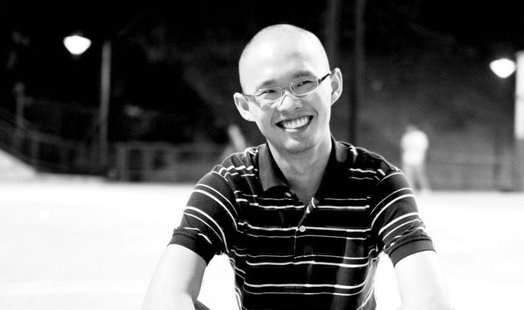
His books include Cinema, Philosophy, Bergman: On Film as Philosophy (Oxford University Press), Art and Intention: A Philosophical Study (Oxford Clarendon Press), Models of Desire: René Girard and the Psychology of Mimesis (The Johns Hopkins University Press), Literature and Rationality: Ideas of Agency in Theory and Fiction (Cambridge University Press), and Literary Knowledge: Humanistic Inquiry and the Philosophy of Science (Cornell University Press). With Berys Gaut he co-editedThe Creation of Art: New Essays in Philosophical Aesthetics (Cambridge University Press), and with Carl Platinga,The Routledge Companion to Film and Philosophy (Routledge).

More information on the Philosophy Seminar Series can be found here. A list of past talks in the series can be found here.

“On Thought Experiments” by Chong-Ming Lim

Graduate Seminar Series: 27 Mar 2012, 3-4pm, Philosophy Resource Room; Speaker: Chong-Ming Lim, MA Student

Abstract:

Thought experiments are frequently used in philosophy, and at many times stand in for arguments. In this presentation, I will examine some specific thought experiments while attempting to construct a suitably general framework that can be used to understand thought experiments. This will hopefully allow the subsequent assessment of their plausibility and efficacy to be carried out.

chong mingAbout the Speaker: Chong-Ming’s primary interests centre on political philosophy and ethics. Currently, he is working on issues pertaining to distributive justice, with particular focus on the process of justification within the contractarian framework. He is also interested in Early Chinese Philosophy and 20th Century Continental philosophy, among others. More on Chong-Ming here.

More information on the Graduate Seminar Series can be found here.

“Wuwei in the Zhuangzi” by Mary K. Riley

Graduate Seminar Series: 27 Mar 2012, 2-3pm, Philosophy Resource Room; Speaker: Mary K. Riley, PhD Student

Abstract:

The Zhuangzi tends to portray the notion of wuwei, or non-action, through depictions of ideal persons rather than directly explaining it. In reading this work we are confronted with portrayals of wuwei that seem incompatible. In this presentation I will describe two seemingly conflicting accounts of wuwei in terms of “non-intervention” and “attending to.” Drawing on Zhuangzi’s theory of knowledge I will show how these accounts of wuwei do not really conflict. Rather, conceiving of wuwei as attending to a situation includes a concept of non-intervention.

maryrileyAbout the Speaker: Mary holds an MA from Kent State University, where her thesis focused on resonating themes in the Confucian and George Herbert Mead’s concepts of self. She hopes to continue research in comparative philosophy looking at the intertwining nature of community and individual in different philosophical contexts. Additionally, she is interested in the methodology of comparative philosophy and the problems associated with distinguishing between eastern and western thought. More broadly, her interests include early Confucian thought, American Pragmatism, Twentieth Century Continental philosophy, and Plato.

More information on the Graduate Seminar Series can be found here.

“Ritual in the Xunzi: A Change of the Heart/Mind” by Winnie Sung

Philosophy Seminar Series: Thursday, 22 Mar 2012, 2-4pm, Philosophy Resource Room; Speaker: Winnie Sung, Postdoctoral Fellow, School of Humanities and Social Sciences, Nanyang Technological University, Singapore; Moderator: Dr. Ben Blumson

Abstract:

This paper seeks to advance discussion of Xunzi’s view of ritual by examining what it is that ritual addresses and the way in which it targets the problem. I argue that the root of the problem is the natural inclination of human beings to be concerned only with self-interest. The reason ritual works is that, on the one hand, it requires a person to disregard concern for self-interest and observe ethical standards and, on the other, it allows one to express feelings in an ethically appropriate way. The ideal effect of ritual on the person is a sense of ease and security; the ideal character shaped by ritual is one of deference and responsiveness in dealing with affairs and people. Based on these conclusions, I will flesh out implicit assumptions Xunzi might have adopted to help us understand the nature of ritual transformation for Xunzi.

About the Speaker: Winnie Sung is a postdoctoral fellow of Chinese Philosophy at Nanyang Technological University. She received her BA in philosophy from University of Toronto and Ph.D. from the University of New South Wales. She is interested in early Chinese thought, with emphasis on Xunzi and Confucian ethics.

More information on the Philosophy Seminar Series can be found here. A list of past talks in the series can be found here.

“Democracy and Epistemic Peerhood” by Anantharaman Muralidharan

Graduate Seminar Series: 20 Mar 2012, 2-4pm, Philosophy Resource Room; Speaker: Anantharaman Muralidharan, MA Student

Abstract:

In democracies, policy is enacted either directly or in-directly according to voters’ preferences. However, voters have different preferences. Two things, therefore, seem legitimate in a democracy: First, that policy be the aggregation of the preferences of all the voters, and secondly, that voters, in the face of disagreement, stick to their guns and not moderate their views. The legitimacy of democracy is therefore in part determined by the notion that each voter is equally likely to get policy questions correct. i.e. voters are taken to be epistemic peers. This implies that a lack of peer-hood among voters can potentially undermine the legitimacy of democracies. This would especially be the case if voter ignorance tended to result in systematically unjust policies. A second, related threat to the legitimacy of majority rule is whether voters should in fact stick to their guns. It is often supposed that epistemic peers who disagree and find out that their disagreement is not isolated should moderate their views or even reserve judgement. If voters were to reserve judgement on a large number of contested issues, then everything else being equal, they should be indifferent between candidates and therefore not vote. Democratic theorists are therefore faced with a dilemma: Either, voters are epistemic peers in which case they should reserve judgement and not vote, or, they are not peers, in which case some voters are in a better epistemic position to determine what the best policy is. This essentially results in an impossibility theorem. Democracy is incompatible with epistemic rationality. Epistemic rationality on the part of voters would tend to undermine epistemic defences of democracy.

murali anna 2About the Speaker: Murali is a Masters student concerned with trying to find a more general justification for the Rawlsian framework. He is interested in broadly trying to derive and defend a free-standing theory of justice; democracy and the justifications for it; as well as social epistemology and its implications for democracy.

More information on the Graduate Seminar Series can be found here.

Philosophy Department Dialogue Session

Philosophers!!!
The Philosophy Department will be holding a dialogue session between the professors and students (majors and minors). This will be a time where the department will update us on recent developments, and on the upcoming plans for the next academic year.

This will also be an opportunity for us to air our views and provide feedback about the curriculum and modules, and on any other issue that you think will be beneficial to yourself and to all majors/minors.

Do come and share your ideas and feedback! Or even if you have nothing to share, do come and learn more about what’s new, and meet more philosophers!

Dinner will be provided and this will be a great opportunity to make more philosopher friends and enjoy a good meal together with us!

All are invited!

Date: Tuesday, 13 March 2012
Time: 5pm
Venue: AS7 Seminar Room B (Level 1)

Please register your attendance either via Facebook (http://goo.gl/ouJZI) or by e-mail to Jonathan (jsim@nus.edu.sg / 81571575).

If you are unable to attend, but would like to contribute your feedback nonetheless, please e-mail them to Jonathan. If you’d like to contribute feedback or ideas (on anything related to the department), but you’d like to remain anonymous, you may also do so via the same e-mail address (above).

“Passions and Punctilios: Models, Methods and Understanding in Physical Organic Chemistry” by Dr. Grant Fisher [1st Singapore Workshop on Integrated History and Philosophy of Science in Practice]

Public Talk: 1 Mar 2012, 2-4pm, AS7 Executive Seminar Room; Speaker: Dr. Grant Fisher, Associate Professor of Philosophy of Science and  Affiliate Professor in the Graduate School of Science and Technology Policy at the Korea Advanced Institute of Science and Technology, Daejeon, South Korea.

Abstract:
In this talk I investigate the interplay of models and approximation methods amid scientific controversy in the recent history of physical organic chemistry. In the mid-1960’s, qualitative orbital symmetry models rationalised a number of previously unrelated organic reactions and provided crucial resources to predict their outcomes. The models and the quantitative approximations that were later able to reproduce the model predictions become a focus of controversies that raged in physical organic chemistry in the late twentieth century. These controversies were pitched both at the level of models and methods of approximation to fundamental physical theory. I argue that while qualitative orbital symmetry models were in dispute, they offered a unique perspective for the independent criticism of theoreticians’ approximation methods. Qualitative models were independent of any procedure of quantitative approximation and performed a “mediating” function by determining standards of approximation legitimacy. I use this case to probe some of the problems of model assessment within the models as mediators account. The case of orbital symmetry models seems to suggest a degree of scientific and meta-scientific convergence on the issue of understanding. I argue we should regard scientific understanding as a legitimate epistemic criterion for the assessment of models.

(Click on image to enlarge)

About the speaker: Grant Fisher is Associate Professor of Philosophy of Science and an Affiliate Professor in the Graduate School of Science and Technology Policy at the Korea Advanced Institute of Science and Technology, Daejeon, South Korea. His research interests include philosophy of scientific practice, models, history and philosophy of chemistry and socially relevant philosophy of science. He has worked at the Universities of Leeds, Durham, the Bosphorus University in Istanbul, and was a Research Fellow at University College London.