https://www.youtube.com/watch?v=IoORI5KQkeE
Big Bad Brand #3: Shein
Seen it on Tiktok? Your personalised ads? Or hear your female/girlfriend(s) casually mention it? Yes – it is THAT Shein. This fast-fashion giant retailer took the internet by storm for its trendy, affordable, and successful social media presence within the youths of today.

“Most-mentioned brand on TikTok”
Shein as a brand has successfully marketed itself to be the brand to be in recent years, with many social media influencers and YouTubers all over the world fawning over the brand. However, as a fast-fashion brand, the cheap and trendy prices definitely comes at a cost. Shein now represents a third (~28%) of the fast-fashion market in the US alone (Ferrer, 2021). But as we all know, the fashion industry is the 2nd biggest polluter in the world and Shein is no saint in this scenario.
What’s the problem with Shein?
To facilitate the quick turnover of such clothes, materials used have to be of low cost for practical reasons and to accommodate the fast pace of production. Hence, it is no surprise that synthetic fabrics such as polyester and nylon are used for production (Gan, 2021). Polyester as a material is also versatile. It is light, strong, and can be easily dyed, making it the ideal material for fast-fashion production. For the consumers, the material is too easy-to-wash and wrinkle-free thus a fuss-free choice.
Polyester – bad or good?
Polyester — convectional production of this material starts with the extraction of crude oil. Crude oil as we know to be is a complex mix and has to be refined and processed to obtain the building units of PET. In order to achieve this, ‘heating, distillation and other processes that release harmful toxins such as BTEX compounds, particulate matter, nitrogen oxides, SO2 and CO” (Mateo et. al, 2021, p.3). However, it can be challenged that polyester production has a lower environmental impact than natural fibers production in terms of water and land (CO, 2021) but the energy required to produce polyester is high (125 MJ of energy per kilogram produced vs. 140 MJ of energy per kilogram for cotton/natural fiber), making it a high-impact process.
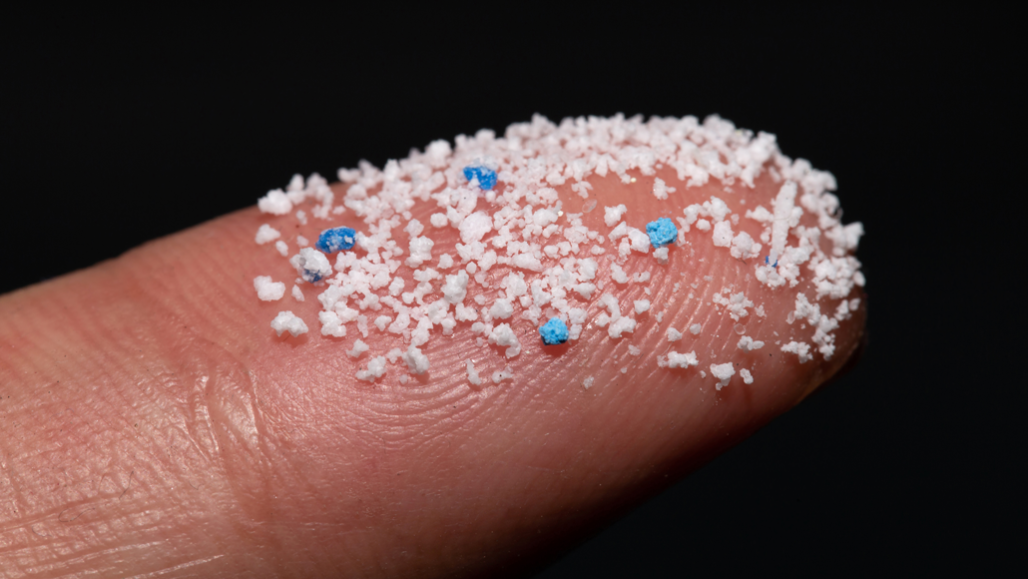
Pollution is a huge problem for fast-fashion brands such as Shein as producing polyester releases wastewaters that can release potentially dangerous substances including “antimony, cobalt, manganese salts, sodium bromide, and titanium oxide” (CO, 2021) into the environment. The oil and chemicals used during extraction are often spilled and cause unnecessary environmental degradation. As polyester is a synthetic material, when washed, the fibers shed and enter waterways and oceans as microplastic fibers. These microplastic accumulates and concentrates within the food chain. Poor marine life animals who accidentally consume the microplastics will then pass on these toxins to humans through the food chain and the environment.
So, once again when we take a step back before we hit that ‘Buy Now’ or ‘Cart Out’ option, should we consider the long-term impacts, or is fashion and trendiness still more important?
Reference
- Common Objective (CO). (2021, October 22). Fibre briefing: Polyester. Common Objective. http://www.commonobjective.co/article/fibre-briefing-polyester
- Ferrer, M. de. (2021, September 9). How are Shein hauls making our planet unlivable? Euronews. https://www.euronews.com/green/2021/09/08/how-are-shein-hauls-making-our-planet-unlivable
- Gan, J. (2022, January 14). Here’s why you should never shop at shein no matter what. Age of Awareness. https://medium.com/age-of-awareness/heres-why-you-should-never-shop-at-shein-no-matter-what-8140d285cf4b
- Palacios-Mateo, C., van der Meer, Y., & Seide, G. (2021). Analysis of the polyester clothing value chain to identify key intervention points for sustainability. Environmental Sciences Europe, 33(1), 2. https://doi.org/10.1186/s12302-020-00447-x