Talk by Ms. Christy Recce on “On the Role of Maternal Touch for Social and Emotional Child Development” (23th Oct 4pm)

October 22, 2012


Title: On the Role of Maternal Touch for Child Social Development

Abstract: Extant research in non-human animals has revealed that maternal touch influences offsprings’ social behavior by shaping the development of neural systems involved in social processing. We asked whether maternal touch could play a similar role in humans. As a first experimental step towards addressing this question, we recorded tactile interactions between mothers and their 4-6 year old children (N=42) in a structured 10 minute play session. Following this session, the child completed  a short behavioral task assessing social sensitivity. In the social sensitivity task, the child categorized geometrical objects overlaid on distractor images of faces or houses. Social sensitivity was quantified as increased distraction by faces relative to houses. The frequency of affectionate maternal touch positively correlated with child social sensitivity. These results raise the possibility that, similar to maternal touch in non-human animals, maternal touch in humans may play a role in shaping the neural systems involved in child social development.

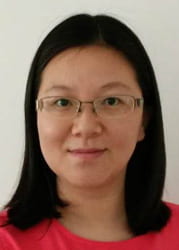
Speaker: Ms. Christy Recce  (M.Soc.Sci. Candidate in Psychology)

Date : Tuesday, 23 Oct 2012

Venue : Seminar Room B, AS7-01-17, Faculty of Arts and Social Sciences

Time : 4.00pm – 5.00pm

About the Speaker

My current interests are focused around the influence of interpersonal tactile interactions. My primary research aim is to investigate the possible role perceived casual tactile interactions play in facilitating pro-social behaviour among adults. I am also continuing to work on a research project I began while I was employed as a research assistant in the Brain and Behaviour Lab, which explores how mother-child touch interactions influence child development, especially cognitive and emotional development.


New Staff: Dr. Ashley FULMER

September 24, 2012


Dr. Ashley Fulmer joined our department in September, 2012. She received her Ph.D. in Industrial and Organizational Psychology at the University of Maryland, College Park. Much of Ashley’s research focuses on trust in organizational settings and can include various referents such as individual, team, and organization. Some of her current projects examine how members in a team come to share their levels of trust in their leader and the consequence of this shared trust. Ashley also has ongoing research projects on negotiation that explore the influences of affect and trust, and on cross-cultural psychology, looking at group differences in attitudes, behaviors, and performance due to divergent cultural values, practices, and norms.


Talk by Dr. Elias Tsakanikos on “Co-morbid psychopathology in adults with autism and intellectual disabilities: A review of the evidence base” (4th Sept 4pm)

August 30, 2012


Title

Co-morbid psychopathology in adults with autism and intellectual disabilities: A review of the evidence base

Abstract 

Adults with Autism Spectrum Disorders (ASD) often present with co-morbid conditions such as Intellectual Disability (ID) and mental health problems and the interaction between these clinical conditions is complex. Prevalence studies are inconclusive as to whether the addition of ASD to ID makes patients more vulnerable to co-morbid psychopathology. This presentation will critically review the evidence base for different rates of co-morbid psychopathology in adults with ID and ASD, discuss methodological issues, diagnostic problems and highlight risk factors based on recent findings from our research in London. 

Speaker: Elias Tsakanikos, Ph.D.

(Senior Lecturer of Personality and Abnormal Psychology, Roehampton College, UK, and Honorary Research Fellow at the Institute of Psychiatry, King’s College London)

Date : Tuesday, 4 Sept 2012

Venue : Seminar Room B, AS7-01-17, Faculty of Arts and Social Sciences

Time : 4.00pm – 5.00pm

About the Speaker

Dr. Elias Tsakanikos obtained his MSc in Research Methods and his Ph.D. in Psychology at University College London. He is currently Senior Lecturer of Personality and Abnormal Psychology at Roehampton University, London, UK. He is an Honorary Senior Research Fellow at the Institute of Psychiatry (IOP), King’s College London and was previously a Lecturer and Course Director of the MSc in Mental Health and Learning Disabilities at the IOP from 2006-2010. He has written more than 45 peer-reviewed papers and book chapters in psychopathology and neurodevelopment of adults with intellectual and developmental disabilities, psychopathology and personality and individual differences. His current research interests focus on psychiatric comorbidity and mental health in autism and other developmental disabilities, predictors of behavioral difficulties in intellectual disabilities and assessment of psychopathology in individuals with disabilities. He is on the editorial board of a number of journals, including the Journal of Mental Health Research in Intellectual Disabilities and Research in Developmental Disabilities. His research has a strong applied focus and he has served as a committee member on a number of national initiatives relating to mental health in learning and developmental disabilities in the UK.


Talk by Ms. Cheung Hoi Shan on 28th Aug 4pm (AS4/02-08; Departmental Meeting Room) “Factors predicting peer likability in preschool: A path model”

August 24, 2012


 Title                      

Factors Predicting Peer Likability in Preschool: A Path Model

Speaker              

Ms. Cheung Hoi Shan

(PhD candidate, Psychology Department, NUS)

Date                      :               Tuesday, 28 August 2012

Venue                  :               AS4-02-08 (Psychology Department Meeting Room)

Time                      :               4.00pm – 5.00pm 

ABSTRACT

Past research has shown that having supportive relationships with peers are particularly advantageous to children’s development. Given this, a meaningful endeavour in child development research would be to identify factors that predict children’s peer likability. Using attachment theory as a theoretical framework, the present study examined how maternal sensitivity, temperament (shyness) and language ability are associated with preschoolers’ peer likability. Participants were 141 mother-child dyads in Singapore. Children were between ages 4 and 6. Fieldwork involved observing each mother and child in a 30-minute free play session, and interviewing the child’s classmates and teacher with regards to his or her likability. Contrary to findings based on Western samples, the results showed that the more sensitive mothers were, the more poorly children fared in terms of peer likability. Shyness helped in children’s peer likability in preschool, but only by female classmates. Language variables were not associated with maternal sensitivity and peer likability, but were instead full mediators in the association between shyness and teacher’s rating of peer relations. The present study brought to light the importance of taking cultural context into consideration in examining influences on children’s social development. The findings also added to the currently limited literature on parent-child relationships in multicultural Singapore.

ABOUT THE SPEAKER

Hoi Shan is a PhD student under the supervision of A/P John Elliott from the Department of Psychology, NUS. She has research interests in local parenting practices, attachment and children’s peer relations. She has worked as a Research Officer at the Singapore Children’s Society for a few years before returning to NUS to pursue her graduate studies.


New Staff: Dr. QIN Lili & Dr. JIA Lile

August 24, 2012

Dr. QIN Lili


Dr. Lili Qin joined our department in August 2012. She completed her Ph.D. in Developmental Psychology at the University of Illinois at Urbana-Champaign. The key question guiding her research is that of how to facilitate children’s adjustment during adolescence, a time when children often face heightened academic and emotional challenges. Her work aims to understand how environmental factors (e.g., culture, parents, and peers) and child characteristics (e.g., their self-construct) may shape children’s academic and emotional adjustment during this stage. Currently, she is examining cultural influences on children’s relationships with their parents. A key endeavor has been to understand the trajectories of such relationships as children progress through adolescence, with attention to the implications for their academic and emotional adjustment.

Dr. JIA Lile


Lile joined our department in August of 2012, after completing his PhD at Indiana University with Prof Edward Hirt. Lile’s research focuses on the cognitive and affective processes of goal pursuit, the maintenance of and striving toward desirable end-states (e.g., a thin figure, a good grade in school). In particular, Lile is interested in the way conscious and unconscious processes of goal pursuit regulate people’s social behavior. His PhD thesis, for instance, explores the unconscious goal-defense mechanism that automatically protects individuals’ goal pursuit in cases of reduced capacity for self-control. Because the goal pursuit process underlies a myriad of human behaviors, Lile has been able to apply his research to such diverse areas as academic achievement, dietary restraint, task performance, creativity, and interracial conflict.


Psychology Graduation Lunch 2012: A Special Celebration

July 13, 2012


FASS AS7 Foyer, with a new look, for the Special Celebration


On 9 July 2012, the Department of Psychology organized a special pre-Commencement Graduation Lunch for its graduating students. Directed by Stephen Lim with the support of Lee Li Neng, Lim Yonghao, and Exco members of the Psychology Student Society, this Event attracted around 200 guests, including graduands, their loved ones, student alumni, as well as Faculty members. An elaborate buffet-style lunch comprising of a live chef station was accompanied by special instant photography services which, Psychology Head A/P Sim Tick Ngee commented, “made the occasion much more meaningful as a commencement occasion”.

Here, we hear from several guests about their experiences of this Event:

 “Just wanted to say thanks for the awesome psych graduation luncheon. It was great to see everyone again and the instant pic team hired was great. I think everyone loved it!”

Amanda Lim, Psychology Graduand 2012

“The pre-commencement lunch was great!”

Lee Rong Cheng, Psychology Graduand 2012

Ambassadors of the Psychology Graduation Lunch 2012


“On behalf of all graduating attendees and our families I would like to extend my appreciation for the Commencement Lunch event [which] thoroughly enriched our memories of Commencement day, and value-added to our graduation experience.

Without the Commencement Lunch, we would have been caught up in the frenzy of phototaking after the commencement ceremony, without adequate time to touch base with our professors and peers. Commencement day would have slipped past us in a blur before we have the opportunity to truly participate in it. The Lunch event afforded us the time to create wonderful memories for ourselves, connect with our peers, and introduce our families to the esteemed faculty. The photo printing service also deserves an honourable mention for allowing us to crystallize our friendships and memories in the form elegant cards.

Once again, on behalf of the graduating cohort of 2012 and our families, I would like to thank the Psychology Department of NUS FASS for organizing the Commencement Lunch and making the end of our undergraduate lives a splendid one. Kudos!”

Tan Chia Niap, Psychology Graduand 2012

Special photography services recounted precious moments at the Lunch instantaneously!


“I have heard very positive feedback from friends who have graduated and could tell that everyone had enjoyed themselves at the lunch. The Dept has indeed put in a lot of effort for this special event and we are glad to be a part of it!”

Annabel Koh, President of Psychology Student Society

The Psychology Department wishes all its graduands a very successful future ahead!

- Stephen Lim 


Psych major, Lam Wing Mun, wins Outstanding Undergraduate Research Prize (OURP)!

June 20, 2012


We are pleased to announce that our undergraduate psychology major, Lam Wing Mun, has been awarded an Outstanding Undergraduate Researcher Prize (OURP) for AY2011/2012, for his honours thesis work with Dr. Stephen Lim. The OURP was first launched in 2006/2007 as an annual university-wide competition to encourage research and to recognize the best undergraduate researchers in NUS. Besides having won the OURP, Wing Mun’s work clinched the Best Paper Certificate at the 2012 International Conference on Psychological Sciences and Behaviours earlier this month. Well done and congratulations, Wing Mun! Here, Wing Mun describes his research experience below.

- Stephen Lim

Having been exposed to cognitive psychology through a number of undergraduate modules I have taken, I decided to try my hands on experimental cognitive psychology for my Honours thesis research, and came under the supervision of Dr. Stephen Lim. My thesis was entitled “Illusory Objects Produce Substitution Masking Effects”. The main objective of this research was to show that illusory objects can function similarly to physical objects (i.e., objects that are tangible to our eyes, have definitive lines and edges, etc.), via the use of the Object Substitution Masking paradigm.

My research experience has been fulfilling and enriching, although coupled with occasional hiccups along the way. There were definitely times when the going got tough! Reviewing the existing literature and deriving a viable research topic and question were the most tedious and discouraging part of my research, but I learnt that this was an important phase because the goal of any research, as my supervisor would always emphasize to me, is to ultimately discover scientific truths and push the frontiers of science forward. The next obstacle came from the actual conducting of experiments where I was always confronted with the problem of limited public labs for data collection, but this all the more made me treasure every single opportunity I could grab hold of to collect data and it helped to know that my supervisor was with me during these frustrating times. Hassles and misery aside, to me, it was most interesting to have met my juniors and their various personalities which kept me afloat the otherwise drowning levels of stress and pressure from constantly having to monitor the progress of my experiments. It was in no way less interesting to be SMS-ing or calling my supervisor every night as well, and I would be telling him how 800 milliseconds still failed that morning and he would be saying “don’t worry, press on, we are very near the truth already, let’s try both 1000 and 1200 milliseconds tomorrow morning.” Those were awesome memories.

When the thesis was finally completed and hard-bound, I imagined streaks of tears as if a reminder to how much we have gone through to make this possible. The success of this research would not be possible without the prudent guidance and encouragement from Dr. Stephen Lim. He always provided valuable comments and suggestions throughout the project, from firming the research question to finalizing the written report. If asked what I think the true meaning of undertaking an Honours thesis is, I would definitely say that it is the opportunity to conduct scientific research on a topic discovered and chosen by my own volition. And Dr. Lim has most definitely provided me such an opportunity. Despite being truly talented and an expert, he never once forced his ideas on me. Rather, he believed that I must produce a question I can call my own and will be proud of, and guided me closely to eventually arrive at that question. I am truly grateful for that, and for how Dr. Lim transformed my outlook of research completely through the process. It was a life-changing experience that I never would forget even after I graduated.


Sze Wei Ping wins Wang Gungwu Medal and Prize!

June 8, 2012


Our full-time teaching assistant, Sze Wei Ping, recently won the Wang Gungwu Medal and Prize, awarded for the best Masters thesis in the Social Sciences/Humanities. Congratulations and well done, Wei Ping! A brief summary of his thesis research is appended below.

This thesis is a megastudy that focuses on what lexical variables influence the reading of Chinese characters.  35 native mainland Chinese speakers participated in a lexical decision task (press “Yes” for characters and “No” for pseudo-characters).  Lexical decision response latencies for 2,500 single characters were collected.  Orthographic (e.g., frequency, stroke count), semantic (e.g., imageability) and phonological factors (e.g., consistency) were examined.  Based on correct responses for the characters, the results showed that both orthographic and semantic variables were more salient than phonological variables in predicting character recognition.  In this thesis, some of the advantages associated with the megastudy approach were also demonstrated.  This includes the selection of the best metric to represent frequency and the conducting of a virtual study.  As this is the first comprehensive attempt to understand Chinese character recognition using lexical decision on a large scale, the results could shine light on some mixed findings previously found in smaller-scale factorial experiments.


Dr. Stephen Lim and research student win Best Paper Award at international psychological sciences conference!

June 8, 2012


Dr. Stephen Lim and his student Lam Wing Mun have won the Best Research Paper Award at the International Conference on Psychological Sciences and Behaviours, held on 2-3 June 2012 in Hong Kong. For more information, click here. Congratulations, Stephen and Wing Mun!


Cheung Hoi Shan and Sze Wei Ping win Graduate Students’ Teaching Awards

May 4, 2012


We are glad to announce that Cheung Hoi Shan and Sze Wei Ping have each won the Graduate Students’ Teaching Award. This is the third time Hoi Shan has won the award, and she has been placed on the Honor Roll. Our congratulations to both of them!

We previously interviewed Hoi Shan about what makes her such an effective teacher and took the opportunity to ask Wei Ping the same questions.

What inspires you to teach?

I see teaching and learning as two sides of the same coin.  Teaching allows me to revisit concepts, theories and the accompanying research with fresh eyes.  That perhaps, to me, is interesting.

What are some of the major challenges you face as a teacher?

Balancing research and teaching can be tricky, as both strive for your time.

Why do you think you are an effective teacher?

I am still learning to be ”an effective teacher”.  At this stage, I am probably better able to respond to the question “What do you think makes for effective teaching?”  An effective teacher should probably try to teach in a way that he/she thinks him/herself would benefit, if he/she were a student.  The ability to listen to students is a precious skill too.